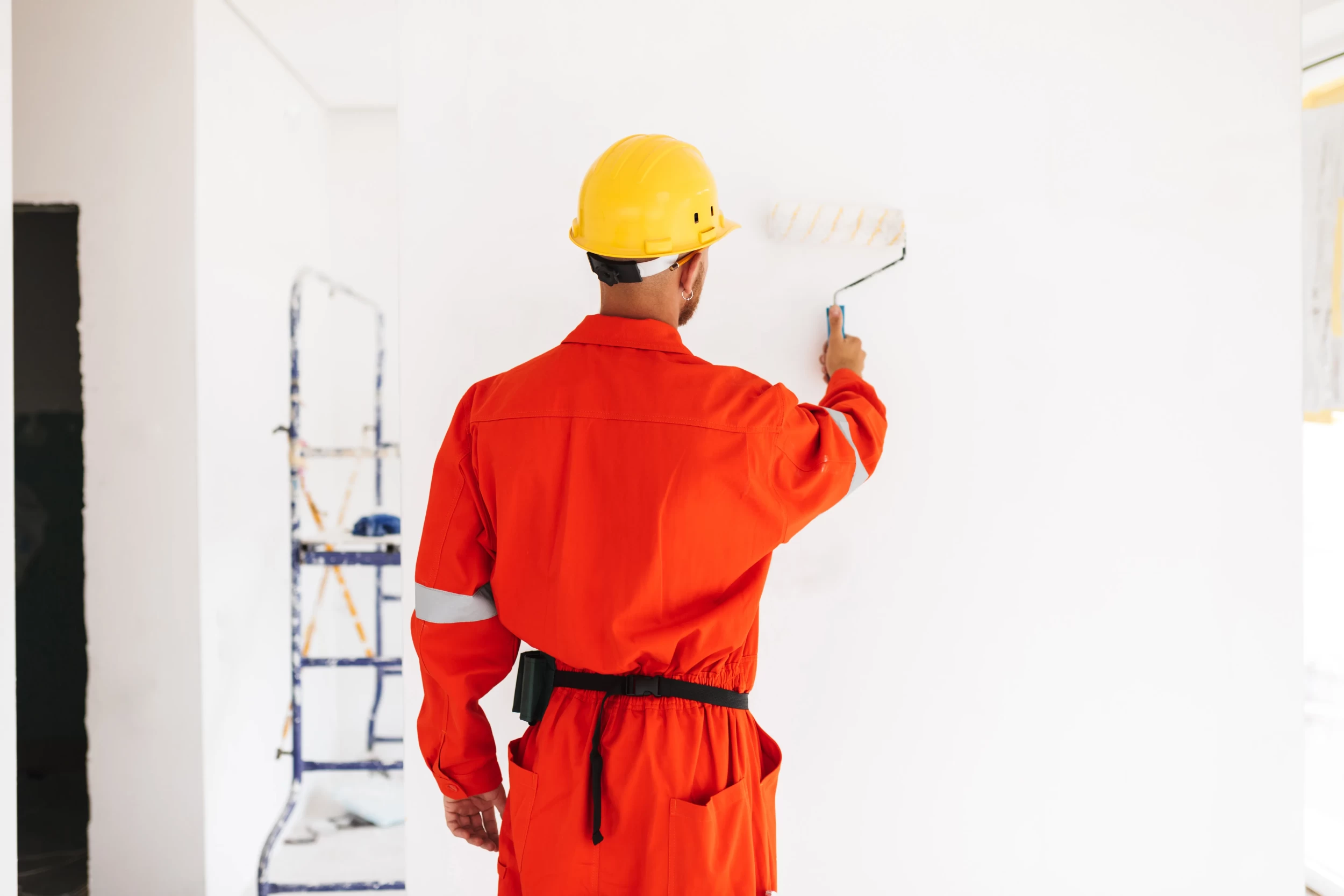

If you’re trying to pin down the cost to paint the interior of a house—especially for a 2,000 sq. ft. home—there isn’t a single “universal” answer. Pricing depends on square footage, room count, wall condition, number of coats, labor rates, paint brand/quality, and scope (walls only vs. walls + ceilings + trim). This guide brings together what homeowners in Kansas typically experience in 2025, using real-world ranges and industry standards so you can budget with confidence.
Location cues matter. Whether you’re in Wichita, KS, Overland Park, Kansas City, KS, Lawrence, Topeka, or nearby suburbs, local labor rates, seasonal demand, and paint availability can nudge your final total up or down. We’ll break it all down—including room-by-room estimates—so you can plan a smart, efficient interior repaint.
To go into the interior house painting costs and options, refer article to Interior House Painting Costs Explained: What Affects Your Final Price, exploring the interior painting cost by home size.
Understanding Why Interior Painting Matters
Interior painting is more than a color change; it’s a protective system that keeps your home looking good and performing well over time. Fresh paint seals porous drywall, smooths minor surface flaws, and creates a washable skin that stands up to everyday life—kids’ fingerprints in the hallway, steam in the bathroom, splashes in the kitchen.
When the coating is specified correctly—proper primer where needed, two-coat coverage on walls, and the right sheen on trim—you get durability, easier cleaning, and a finish that stays brighter and more even for years.
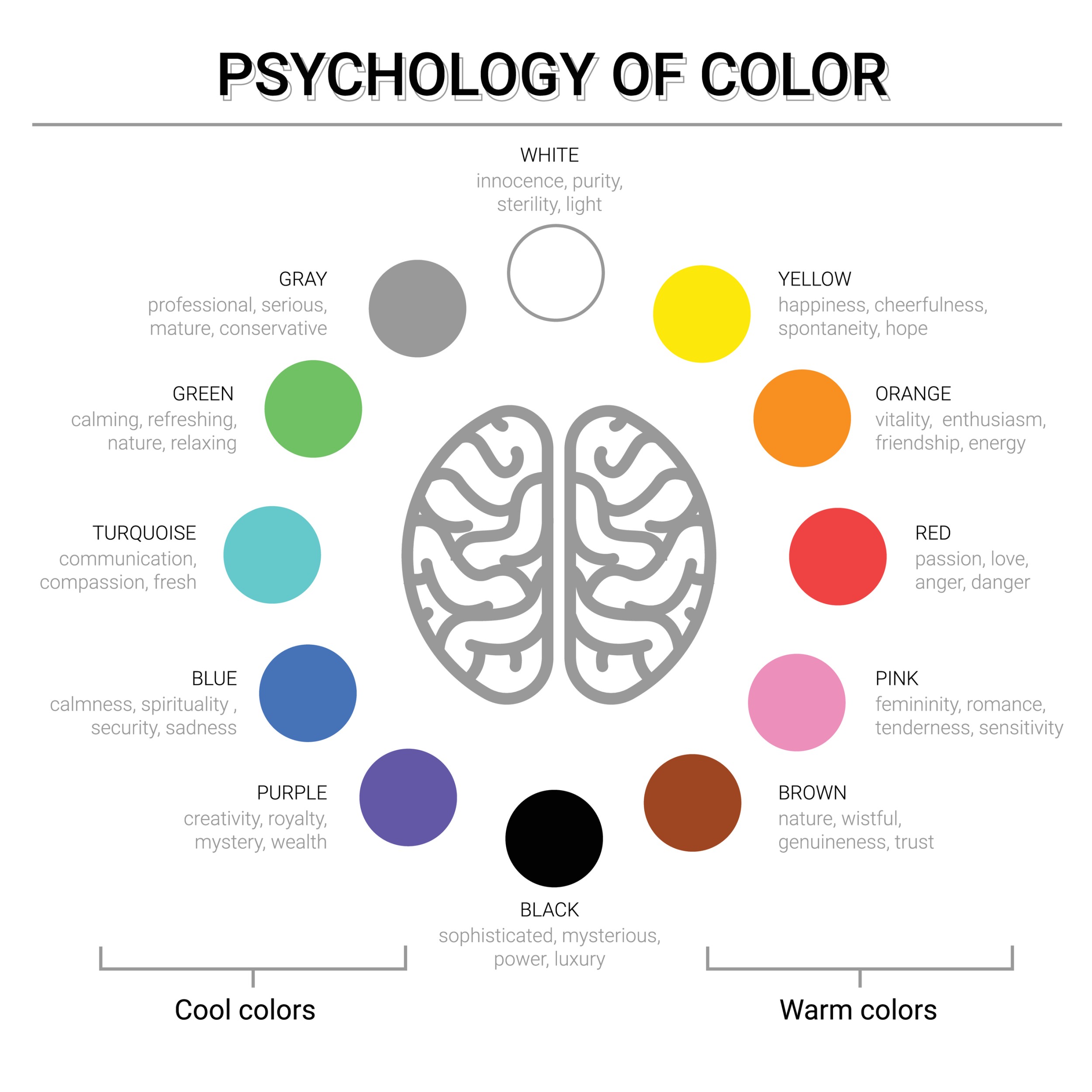
Paint also drives how a room feels. Light, neutral palettes can make compact spaces read larger and more open; deeper accent tones can add warmth, depth, or a focal point without changing a single piece of furniture. Because color reflects and absorbs light differently, a well-planned scheme can improve perceived brightness and even help balance natural light between rooms.
This is why many homeowners pair an eggshell or matte wall finish with satin or semi-gloss on doors and baseboards—the contrast outlines architecture, sharpens lines, and elevates the overall look.
There’s a health and comfort component, too. Modern low-VOC and zero-VOC paints minimize odor during and after the project, supporting better indoor air quality—especially important for bedrooms, nurseries, and homes that must remain occupied during painting. In moisture-prone spaces like kitchens and baths, moisture-resistant coatings and stain-blocking primer help prevent peeling, bubbling, and recurring stains, protecting the substrate and reducing the frequency of repairs.
From a financial perspective, interior painting is one of the most cost-effective upgrades you can make. It refreshes worn surfaces, hides patchwork from previous fixes, and creates a “move-in ready” impression that boosts resale appeal. Routine repainting also lowers long-term maintenance costs: a scuff-resistant, washable finish can extend the life of the coating cycle, while timely touch-ups prevent small blemishes from becoming larger repairs.
Average Cost to Paint 2,000 Sq. Ft. House Interior (2025)
For a typical 2,000 sq. ft. home in 2025, a realistic working range for a full interior repaint lands around $6,000–$10,500 when walls, common ceilings, and standard trim are included. If you scope walls only, expect something closer to $5,000–$8,000, assuming average prep, two-coat coverage, and conventional 8–9 ft ceilings.
Translating that to a per-square-foot view, many mid-market projects fall roughly between $3.00 and $4.75 per sq. ft. once materials and labor are factored in, though simplified “walls-only” quotes can look a bit lower on paper.
The spread comes from project variables that meaningfully change labor hours and materials. Homes with tall or vaulted ceilings, heavy patching needs, or a dark-to-light color change require more primer and additional coats to achieve even, durable coverage.
Trim and doors can add a notable line item, especially when you’re using enamel systems for a smooth, scuff-resistant finish on baseboards, casings, and multi-panel doors. Even when wall square footage is identical, layout and access—stairwells, built-ins, and complex masking—affect production rates and therefore the final total.
Paint selection also nudges the budget. Low- or zero-VOC lines, upgraded scrub-resistant finishes, and specialty primers (stain-blocking, bonding, or PVA for new drywall) cost more by the gallon but often reduce repaints and touch-ups later. Local conditions matter, too.
Regional labor rates, seasonal demand, and product availability can swing pricing up or down a few hundred to a few thousand dollars across markets. In short, if you’re planning a 2,000 sq. ft. interior, start with the ranges above and refine your estimate by clarifying scope (walls vs. walls + ceilings + trim), surface condition, coating system, and any unique access or design details.
Room-by-Room Cost Ranges
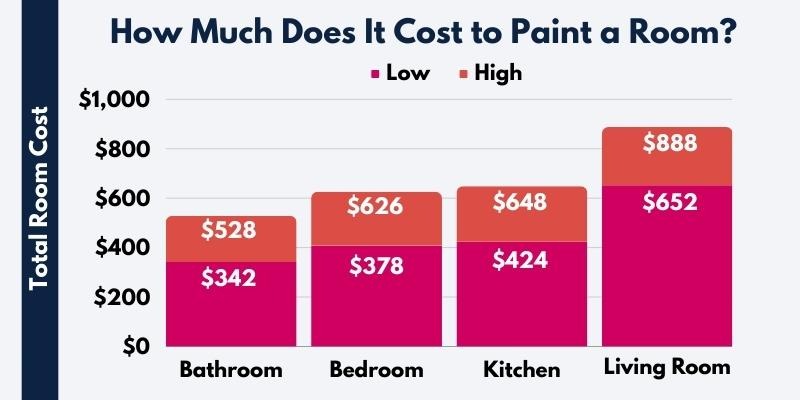
Below is a clear, skimmable table of common Kansas homeowner scenarios.
|
Area / Room Type |
Average Cost Range |
Cost per Sq. Ft. |
Notes |
|---|---|---|---|
|
Bedroom (10×12) |
$300 – $700 |
$2.50 – $4.00 |
Includes walls; add ceiling/trim if specified |
|
Living Room |
$600 – $1,200 |
$2.50 – $4.50 |
Taller walls & vaults increase cost |
|
Kitchen |
$400 – $800 |
$3.00 – $5.00 |
Degreasing + stain-blocking primer often needed |
|
Bathroom |
$200 – $500 |
$2.00 – $3.50 |
Moisture-resistant satin/semi-gloss recommended |
|
Hallways/Stairs |
$350 – $900 |
$2.50 – $4.50 |
High-traffic; patching drywall & handrail masking |
|
Ceilings (whole home) |
$600 – $1,400 |
— |
Texture height & access matter |
|
Trim & Doors (whole home) |
$1,200 – $2,500 |
— |
Enamel systems, door style count drive time |
|
Entire House (2,000 sq. ft.) |
$6,000 – $10,500 |
≈ $3.00 – $4.75 |
Kansas mid-market, average prep & two-coat spec |
According to HomeAdvisor, the national average interior paint cost ranges approximately $2,000–$6,000 for typical homes; per-sq-ft averages are often quoted at $2–$6.
Interior Painting Options
-
Choosing the right paint system starts with walls. For most living areas, a two-coat spec in an eggshell finish balances washability with a soft, low-sheen look that hides minor imperfections. If you’re covering a dark color or patchy surfaces, add a high-hide primer first to improve adhesion and uniform coverage.
-
Ceilings are typically finished in a flat or ultra-flat sheen to diffuse light and conceal joints or slight texture. Popcorn or heavily textured ceilings take longer and often require specialized rollers or a spray application, so factor that into timing and cost. If you want a “fifth-wall” design moment, consider a subtle tint that warms the room without creating glare.
-
Trim and doors benefit from enamel systems in satin or semi-gloss. These finishes cure harder, resist scuffs, and clean up easily around baseboards, casings, and hand-touched areas. Expect more prep here—light sanding between coats and careful caulking—to achieve crisp lines and a durable, furniture-like finish.
-
Sheen selection should match how a space is used. Eggshell is versatile for family rooms and bedrooms, satin handles moisture in kitchens and baths, and semi-gloss is best for trim work. Higher sheen reflects more light and cleans more easily, but it also shows surface flaws, so invest in thorough prep when choosing shinier finishes.
-
Low-VOC and zero-VOC paints have become the default for occupied homes. They reduce odor during application and improve indoor air quality, especially helpful for households with kids or sensitive occupants. Premium lines often cover better in fewer passes, saving labor and delivering a smoother, more even film.
-
Color strategy matters as much as product choice. Neutrals and layered whites maximize brightness and resale appeal, while a single accent wall can add depth without overwhelming the space. For open plans, keep a consistent palette and use subtle shifts in tone to define zones while maintaining flow.
-
Specialty options can solve specific problems. Stain-blocking primers lock in water marks or nicotine residue, bonding primers help over glossy areas, and moisture-resistant formulas protect baths and laundry rooms. In high-traffic zones, scrubbable coatings extend the repaint cycle and keep walls looking fresh longer.
-
Coverage is the final piece. True two-coat coverage remains the standard for color consistency and durability, especially when shifting from dark to light. A professional spec will spell out where primer is used, how many finish coats are included, and whether ceilings and trim are part of the same phase or quoted separately.
Labor Rates to Paint 2,000 Sq. Ft. Home Interior (2025 Guide)
Painting labor is usually the biggest line item in an interior repaint—often 50–65% of the total. For a typical 2,000 sq. ft. home, that labor slice reflects far more than brush time. It covers surface protection, furniture moves, patching and sanding, cut lines, rolling or spraying, ladder work, masking, site cleanup, and a final touch-up walk-through. When you hear a labor rate, remember you’re buying a complete, professional process—not just paint on walls.
Most reputable residential crews price labor in two common ways: hourly or per square foot. Hourly billing is straightforward when scope is uncertain or repair-heavy. Per-sq-ft pricing is efficient once a contractor has measured walls and confirmed the number of coats, ceilings, trim, and doors. In both cases, the final labor total follows the same drivers: how much surface is getting paint, how difficult access is, and how much prep is needed to make paint actually last.
Homeowners in midwestern markets like Kansas typically see interior painter labor rates equivalent to roughly $1.50–$3.00 per paintable sq. ft. for walls under average conditions, with ceilings, trim, and doors priced on top. When converted to hourly terms, that often aligns with crew billing that effectively works out to $45–$70 per painter per hour, depending on experience, warranty standards, and demand. Metro cores with higher overhead trend near the top of the range; smaller towns trend lower.
Scope clarity changes labor quickly. “Walls only, two coats, average repair” is not the same as “walls plus ceilings and all trim, dark-to-light color change, heavy patching.” Add ceilings and you add masking time, ladder setup, and overhead rolling or spraying. Add trim and doors and you add meticulous sanding, caulking, and enamel work. Each layer expands labor hours—and the most reliable estimates separate these items so you can see what you’re paying for.
Wall condition is the silent multiplier. Clean, sound walls allow fast scuff-sand and paint. Walls with nail pops, settlement cracks, stains, or peeling bump labor because you need patching, stain-blocking primer, and extra sanding. Expect 10–15% more labor time if a home needs moderate repair, and more still for significant texture fixes or water-damage remediation. Skipping this step shifts cost to the future when new paint fails prematurely.
Color moves matter, too. Dark-to-light transitions often require a high-hide primer and a third pass in certain areas, especially over sharp color breaks or patched spots. Even on “two-coat” specs, pros build a schedule that allows proper dry time to avoid flashing and adhesion issues. This is why a trustworthy crew doesn’t promise impossible turnarounds—they plan sequence, cure times, and room-by-room access so the finish holds up.
Crew composition influences labor rate and project speed. A two-person crew may cost less per hour than a larger team but spend more days onsite. A four- to five-person crew bills higher per day but finishes faster, which matters if you’re living in the home. Well-run teams also compress downtime between coats, maintain clean cut lines at ceilings and trim, and reduce callbacks—small differences that show up as a smoother finish and fewer disruptions.
Seasonality in Kansas nudges rates as well. Late spring through summer is peak demand; calendars fill and labor quotes rarely discount. Late fall and winter often bring better availability and more flexible scheduling. If you have a firm deadline—like listing the home—book early. If you have flexibility, ask about shoulder-season mobilization for the same quality at a friendlier pace.
Here’s a simple way to ballpark labor for a 2,000 sq. ft. home’s walls under average conditions. Multiply your paintable wall area by a mid-market labor factor (many homeowners use $1.75–$2.50 per paintable sq. ft. as a planning lens), then add labor for ceilings and trim. If your project includes notable repairs, add a contingency line so surprises don’t derail your budget. A transparent, line-item proposal should show each component, not hide it inside a single lump sum.
The “hourly vs. per-foot” question is less about which is cheaper and more about which is clearer for your scope. If you’re still testing colors and revising rooms, hourly may be fair to both sides. If the plan is set, per-foot is cleaner and easier to compare. Either way, insist on a written scope that spells out prep, number of coats, which rooms are in, and whether ceilings, baseboards, casings, and doors are included.
When considering DIY vs professional painting cost, note that DIY can reduce immediate outlay, but labor value isn’t just speed. Pros bring process: the right primer for slick trim, stain-blocking where needed, correct nap for the substrate, clean cut lines, and tidy protection of floors and fixtures. Those details minimize rework and keep paint performing for years. The cheapest labor is the job you don’t have to repaint next season.
If you’re in Kansas and want a precise number—not just a range—the path is quick: a walkthrough, measured walls, and a written scope that accounts for repairs, coatings, and access. With those details, the labor portion for a 2,000 sq. ft. interior becomes predictable, and so does the schedule.
Kansas-Specific Considerations (Labor, Seasonality, Materials)
-
Labor: Interior painter rates in Kansas are competitive vs. coastal metros; expect variability by city and by crew size or experience.
-
Seasonality: Late spring–summer sees peak bookings; consider early spring or late fall/winter for faster starts.
-
Materials: Availability of low-VOC lines and enamel trim systems is strong across major brands in Wichita, Overland Park, Topeka; specialty primers sometimes require advance order.
-
Home age: Older homes can need more patching, caulking, and stain-blocking primer—plan +10–15% for repairs.
Budgeting a 2,000 Sq. Ft. Interior
Budgeting starts with scope. Decide if you’re painting walls only or adding ceilings, trim, and doors. More surfaces mean more labor hours, primer, and two-coat coverage.
Estimate the paintable area. For many 2,000 sq. ft. homes, wall surface is roughly 2.5–3× the floor area (layout dependent). This quick rule helps you forecast gallons, labor, and scheduling.
Set realistic per-sq-ft ranges. Mid-market interiors commonly land around $3.00–$4.75/sq. ft. for walls with average prep; ceilings and enamel trim are quoted separately.
Prioritize prep. Small issues—patching drywall, caulking, stain-blocking primer—protect the finish and reduce future touch-ups. Plan 10–15% of the budget for repairs on older walls.
Choose the right system. Low-VOC or washable, scuff-resistant paints cost more upfront but extend repaint cycles—especially in hallways, kids’ rooms, and kitchens.
Control scope creep. Color changes from dark to light, accent walls, or textured ceilings may add coats or specialty primers. Confirm these in the written scope to avoid mid-project surprises.
Time is money. Occupied homes add masking and furniture moves. Off-season starts can shorten lead times; peak season may raise labor costs or stretch timelines.
Keep a small contingency. A simple 3–5% reserve covers extra materials, unforeseen repairs, or minor layout changes without derailing the plan.
-
Quick formula: (Paintable sq. ft.) × (local $/sq. ft.) + (repairs 10–15% if needed) + (ceilings/trim add-ons) + (3–5% contingency)
-
Line-item checklist: walls (two coats), ceilings (height/texture), trim & doors (enamel system), surface repairs, primer type, number of rooms, access/masking, cleanup, warranty.
-
Pro tip: Lock sheen mapping in the quote—eggshell for main walls, satin/semi-gloss for moisture or high-touch zones—to balance appearance, washability, and cost.
Need a clear, line-item labor estimate for your 2,000 sq. ft. interior in Kansas? Contact Rodriguez Painting Kansas or call 816-289-7239 for a measured proposal with defined prep, coats, and timeline.
Conclusion
Figuring out the cost to paint the interior of a house—especially a 2,000 sq. ft. layout—comes down to the scope, condition, coatings, and local labor. For most Kansas homes in 2025, expect a $6,000–$10,500 band for a thorough walls-plus-ceilings-plus-trim project under average conditions, with project-specific details moving your total up or down. If you want precise numbers, the fastest route is a walkthrough, measured scope, and a line-item proposal.
Ready for a precise, room-by-room interior painting quote in Kansas?
Contact Rodriguez Painting Kansas or call 816-289-7239 for a free estimate in Kansas.
FAQs
What’s the fastest way to estimate the cost to paint a 2000 sq ft house interior?
Multiply your paintable square footage by a local per-sq-ft rate (Kansas mid-market often lands near $3–$4.75 for walls + common add-ons), then adjust for ceilings, trim/doors, and repairs.
Do painters charge by room or by square foot?
Commonly by square foot for walls; smaller rooms may have minimums. Ceilings/trim/doors are often quoted separately.
How many coats are typical?
Two-coat coverage is standard for uniformity, hiding power, and washability. Dark-to-light color changes can need a high-hide primer and possibly a third coat.
Which sheen is best for interior walls?
Eggshell for most living spaces; satin/semi-gloss for kitchens, baths, and trim (better washability and moisture resistance).
What impacts Kansas pricing the most?
Room height/layout, prep/repairs, paint system (low-VOC/premium lines), and seasonal demand.
Can I reduce cost without sacrificing quality?
Yes—finalize colors early, group rooms in one mobilization, use washable paints in high-touch zones, and schedule in shoulder seasons.